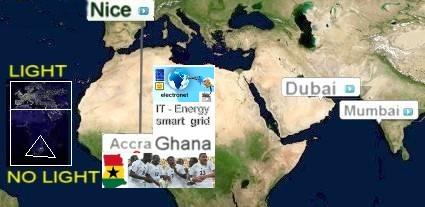


Ghana2010 Worldcup Africa

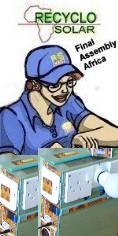
RECYCLO SOLAR Electrobox 230 V lighting
Final Assembly Africa of premanufactured completley
knocked down kits,

Prewiring, soldering cables and connectors
Assembly housing, source houshold switches


2008: EU Nice, London, Accra Ghana, Togo first tests
2009:     100 pcs Electrobox
2010:  10 000 pcs Electrobox / year Final assembly
        1 000 kits DrLight portable to ship by air
2011:  70 000 pcs Electrobox
      180 000 pcs DrLight

Actor: Alliance Consortium "Lighting Africa & Islands"
       contact: ip21st@lycos.com

Lighting Africa Commitment
O Enhance human and institutional capacity in the design and delivery of improved lighting products & services O Undertake activities with other Lighting Africa partners as appropriate. O Promote quality market creation, including durable, long-life products; maximize energy efficiency, minimize material waste in production and packaging; avoid/minimize use of toxic materials while providing means for collection/recycling such materials (e.g., batteries); make spare parts and repair services; and consider adoption of a Lighting Africa "quality" mark to describe, differentiate and designate product quality.Who Should Participate in Lighting Africa and Why ? O International Lighting Manufacturers/Assemblers: diversify products for off-grid lighting solutions O Local Distributors/Service Providers: existing networks with new products into new markets O Governments: deliver rapidly lighting services to unelectrified rural areas O Donors: support innovative large scale & public private energy solutions O NGO's: Lighting Africa is searching for experienced and qualified NGO's to support project implementation. O Financial Institutions:

Lighting Africa seeks to create innovative business models to deliver modern lighting to unelectrified rural areas, and is lookign for financial institutions, microfinance institutions, and investors to serve as partners. ====================================================== As a Lighting Africa partner I support this principles ======================================================